Introduction: Setting the Scene at the Munich Security Conference
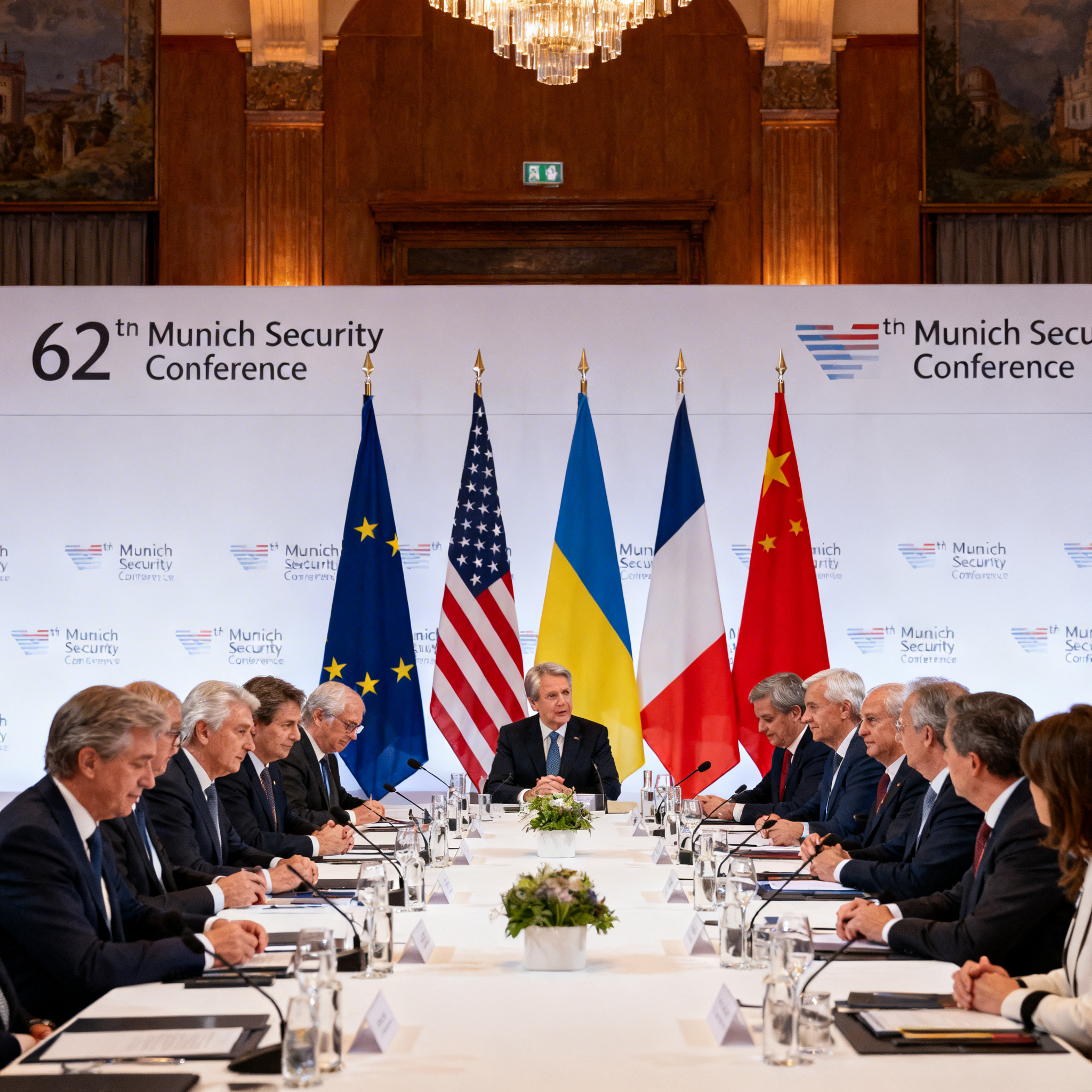
The world’s most influential security forum convenes annually in Bavaria, where diplomats, defence ministers, and heads of state gather to confront humanity’s most pressing threats. The Munich Security Conference has evolved from a Cold War dialogue platform into the premier venue for addressing today’s complex geopolitical landscape, where traditional alliances face unprecedented challenges.
This year’s gathering arrives at a particularly turbulent moment. The Munich Security Report 2024 reveals a world increasingly defined by strategic competition and fragmented partnerships. Global leaders must navigate an intricate web of tensions spanning from Eastern Europe’s battlefields to the South China Sea’s contested waters.
The conference’s unique format—bringing together adversaries and allies alike—creates opportunities for candid dialogue that formal diplomatic channels often cannot achieve. Participants engage in frank discussions about everything from nuclear deterrence to cyber warfare, whilst the world watches for signals of cooperation or further division.
As delegates convene in Munich’s historic halls, they face questions that will define the next decade of international relations. The conversations ahead will illuminate how major powers intend to address the mounting security challenges that threaten global stability.
Overview of Geopolitical Tensions: Europe, US, Ukraine, and China
The geopolitical landscape dominating discussions at the 62nd Munich Security Conference reflects a world grappling with unprecedented complexity. According to the Munich Security Index 2024, global security perceptions have reached critically low levels, with multiple crises converging to create what analysts describe as a “polycrisis” scenario.
Ukraine remains the epicentre of European security concerns, fundamentally reshaping NATO’s strategic posture and forcing a complete recalibration of transatlantic defence priorities. The conflict has exposed vulnerabilities in European energy infrastructure whilst simultaneously accelerating military modernisation programmes across the continent.
Meanwhile, US-China tensions continue to ripple through global supply chains and technological ecosystems. Trade restrictions, semiconductor competition, and territorial disputes in the South China Sea have created a new era of strategic competition that extends far beyond bilateral relations. The Executive Summary highlights how this rivalry increasingly forces allies to navigate between economic pragmatism and security imperatives.
These interconnected tensions create a challenging diplomatic environment where traditional alliance structures face pressure to adapt. However, this complex landscape also raises fundamental questions about whether established security frameworks remain adequate for addressing 21st-century challenges.
Contrarian View: Are Traditional Alliances Still Relevant?
Whilst world leaders gather annually in Munich to reinforce traditional alliance structures, a growing chorus of voices questions whether these Cold War-era partnerships remain fit for purpose in an increasingly multipolar world. The Munich Security Report 2024 acknowledges this tension, noting how established frameworks struggle to address contemporary challenges ranging from cyber warfare to climate security.
Critics argue that rigid alliance structures, particularly those centred on Article 5 commitments, may actually constrain diplomatic flexibility when dealing with complex adversaries like China. Rather than automatic collective responses, some strategists advocate for issue-specific coalitions that can adapt more nimbly to evolving threats. This perspective suggests that traditional alliances may inadvertently create echo chambers, limiting creative problem-solving approaches.
However, defenders of established partnerships point to their proven crisis-management capabilities, particularly evident in the coordinated Western response to Russian aggression. The debate reflects a fundamental tension between institutional continuity and adaptive governance—one that increasingly shapes how democracies approach global security architecture.
This institutional soul-searching becomes particularly acute when examining specific security challenges that test alliance cohesion.
Security Challenges: Nuclear Threats and Beyond
Nuclear deterrence remains at the forefront of global security challenges discussed at Munich, yet delegates increasingly recognise that contemporary threats extend far beyond traditional military arsenals. The conference’s focus has evolved to encompass cyber warfare, disinformation campaigns, and hybrid threats that blur the lines between peace and conflict.
Recent intelligence assessments highlight how state and non-state actors exploit technological vulnerabilities to undermine democratic institutions. Transparency International’s defence analysis reveals that corruption within defence sectors creates additional security vulnerabilities, particularly affecting procurement processes and strategic decision-making capabilities.
The nuclear dimension itself has grown more complex, with emerging technologies like artificial intelligence and autonomous weapons systems raising questions about command and control protocols. Delegates expressed particular concern about the intersection of nuclear capabilities with cyber vulnerabilities, where a single compromised system could escalate tensions dramatically.
Meanwhile, climate-related security threats gain prominence as resource scarcity and environmental degradation drive migration patterns and regional instability. These interconnected challenges require coordinated responses that traditional alliance structures struggle to address effectively, setting the stage for examining how different global powers approach these multifaceted threats.
Comparison: Perspectives from Key Players
The 62nd Munich Security Conference reveals stark divisions in how major powers perceive current geopolitical tensions. European leaders, led by Germany’s diplomatic corps, advocate for multilateral approaches that prioritise dialogue over confrontation. German Foreign Ministry officials emphasise moving from “lose-lose” scenarios to “win-win” solutions, reflecting a Continental preference for negotiated settlements.
American perspectives, whilst aligned with European values, demonstrate greater willingness to employ economic sanctions and military deterrence. US officials consistently frame security challenges through the lens of strategic competition, particularly regarding China’s growing influence and Russia’s territorial ambitions.
Chinese representatives, when present, advocate for what they term “peaceful development” whilst defending their expanding sphere of influence. This creates a fundamental tension with Western interpretations of territorial sovereignty and international law.
Ukrainian officials bring an urgency that contrasts sharply with more measured diplomatic approaches. Their direct experience of conflict shapes a perspective that views compromise as potentially existential weakness rather than diplomatic strength.
These divergent viewpoints create a complex dynamic where shared threats fail to produce unified responses, setting the stage for deeper examination of how conventional diplomatic wisdom confronts contemporary realities.
Conventional Wisdom vs. Reality: Understanding the Global Security Discourse
The Munich Security Conference consistently reveals significant gaps between conventional security wisdom and emerging geopolitical realities. Traditional assumptions about deterrence, alliance structures, and threat assessment increasingly struggle to address hybrid warfare tactics, cyber vulnerabilities, and the interconnected nature of modern conflicts.
Europe security frameworks, long predicated on NATO’s Article 5 guarantees, now grapple with grey-zone operations that deliberately fall below traditional escalation thresholds. Whilst conventional wisdom suggests clear red lines and proportional responses, reality presents a spectrum of ambiguous threats—from disinformation campaigns to infrastructure sabotage—that challenge existing defence paradigms.
The Munich Security Conference Annual Report 2024 highlights this disconnect, noting how established security doctrines struggle with non-state actors wielding state-level capabilities. Conference discussions reveal that leaders increasingly recognise the inadequacy of Cold War-era frameworks for contemporary challenges.
Perhaps most telling is the evolving nature of alliance solidarity, where economic interdependence often contradicts security imperatives. These complex realities demand fresh analytical frameworks that challenge long-held assumptions about how security operates in practice.
Summary Table: Key Comparisons at a Glance
The stark divisions emerging from the 62nd Munich Security Conference can be distilled into several critical comparison points that illustrate the complexity of contemporary global security challenges.
| Dimension | European Perspective | US Approach | Key Tensions |
|---|---|---|---|
| Strategic Priority | Immediate regional stability | Global power competition | Resource allocation conflicts |
| China Relations | Economic interdependence focus | Security competition emphasis | Trade vs. security balance |
| Defence Spending | Gradual NATO compliance | Immediate burden-sharing demands | Timeline disagreements |
| Ukraine Strategy | Long-term integration support | Military aid prioritisation | Reconstruction vs. defence focus |
US Ukraine relations particularly highlight these divergent approaches, with American emphasis on military capabilities contrasting sharply with European focus on institutional integration and economic reconstruction. The Munich Security Index 2024 reveals that 68% of surveyed experts believe transatlantic coordination remains suboptimal despite shared fundamental objectives.
These comparison points underscore a fundamental challenge: whilst allies agree on threats, they disagree on solutions. However, such strategic differences also reveal inherent limitations in current global security frameworks that require careful consideration.
Limitations and Considerations in Global Security Strategies
The evolving landscape of global security strategy faces inherent constraints that complicate even the most well-intentioned diplomatic efforts. Traditional security frameworks often struggle to adapt to contemporary challenges, particularly when addressing the complex dynamics of China geopolitics and multipolar power structures.
Resource allocation represents a fundamental limitation, as nations must balance immediate security needs against long-term strategic investments. The Munich Security Index 2024 highlights how security perceptions vary dramatically between regions, suggesting that universal approaches may prove inadequate for addressing localised threats and priorities.
Perhaps most significantly, the interconnected nature of modern security challenges creates unintended consequences. Military interventions designed to enhance stability can exacerbate regional tensions, whilst economic sanctions intended to modify behaviour often impact civilian populations more than targeted regimes. These strategic paradoxes underscore the complexity of contemporary security decision-making.
The temporal dimension adds another layer of difficulty—security strategies require years to implement effectively, yet geopolitical landscapes can shift rapidly. This mismatch between strategic planning cycles and the pace of international change creates persistent vulnerabilities in global security architecture, setting the stage for examining practical approaches to navigating these multifaceted challenges.
Key Takeaways: Navigating Global Security Challenges
The 62nd Munich Security Conference illuminated several fundamental principles for navigating an increasingly complex global security landscape. Most critically, effective multilateral dialogue remains essential despite deepening geopolitical divisions—a reality underscored by the persistent attendance of adversarial nations even amid heightened tensions.
The conference demonstrated that successful security discussions must balance immediate crisis response with long-term strategic planning. Ukraine’s situation exemplifies this dual approach: whilst providing urgent military support addresses immediate defensive needs, sustainable peace requires comprehensive frameworks addressing root causes and regional stability mechanisms.
Power dynamics continue shifting from unipolar to multipolar configurations, necessitating adaptive diplomatic strategies. Traditional Western leadership faces challenges from emerging coalitions, particularly the China-Russia partnership, which demands more inclusive dialogue formats and recognition of diverse security perspectives.
Perhaps most importantly, the conference highlighted that security challenges increasingly transcend traditional boundaries—cyber threats, climate impacts, and economic vulnerabilities require coordinated responses that no single nation can address effectively. Success depends on building resilient partnerships that can withstand political turbulence whilst maintaining operational effectiveness.
These insights form the foundation for understanding how international security cooperation must evolve to address 21st-century challenges, drawing from both historical precedents and contemporary innovations in diplomatic engagement.
Sources and References
The analysis presented in this article draws upon authoritative documentation from the 62nd Munich Security Conference and related international security research initiatives. These sources provide comprehensive insights into contemporary geopolitical challenges and strategic policy frameworks.
Primary documentation includes the Munich Security Report 2024, which offers detailed analysis of global security trends and regional dynamics. The accompanying Munich Security Index 2024 provides quantitative assessment of security perceptions across different regions and stakeholder groups.
Official conference proceedings and policy statements are documented in the MSC Annual Report 2024, whilst the Executive Summary distils key findings for policymakers and analysts.
Additional perspectives on security governance challenges are provided by Transparency International Defence & Security, which examines institutional integrity within defence frameworks.
The German Federal Foreign Office’s analysis of conference outcomes provides valuable insights into European diplomatic perspectives on multilateral security cooperation and strategic partnerships in an increasingly complex global environment.